Renting compact equipment: Seven things to consider before choosing a machine
But choosing the right machine isn’t always straightforward. Renting the wrong equipment can increase costs, reduce productivity and create unnecessary delays. Before signing a rental agreement, ask these seven questions.

1. What do you need the compact machine to do?
Start with the project requirements rather than the machine itself. Are you excavating trenches, landscaping, loading material, preparing a site, carrying out demolition works, lifting, grading or moving pallets?
Once you’ve defined the task, consider the level of performance required. What types of material will the machine be handling? If you’re digging, what depth, reach, lift height and capacity do you need? If you’re loading or lifting, what weight must the machine safely handle?
Start with the job, not the machine. That will help you choose equipment that delivers the performance you need without paying for unnecessary size or capacity.
2. What size compact machine do you really need?
Bigger isn’t always better. While a larger machine may offer more power and higher lifting or loading capacity, it can also create challenges around access, transport and manoeuvrability. Bigger machines are typically more expensive to rent and consume more fuel, increasing operating costs and potentially adding unnecessary expense to the project.
At the same time, selecting the smallest machine simply because the rental rate is lower can be a false economy. If the machine lacks the performance needed for the job, tasks may take longer to complete, reducing productivity and increasing labor costs.
When choosing a machine, consider the smallest model that can comfortably, safely and productively complete the work required. This can help you balance productivity with rental and operating costs.
3. What are the jobsite conditions?
The jobsite can be just as important as the application when selecting a compact machine. Before renting, consider site access, including width and height restrictions, available working space, ground conditions, slopes, and whether the machine will operate indoors or outdoors. You should also consider whether you’re working in a noise-sensitive area or an environment with emissions restrictions, such as near schools, hospitals, homes or offices.
For excavators, tail swing, the amount the rear of the machine extends beyond the tracks when rotating, can be an important consideration when working on tight jobsites. For loaders, manoeuvrability, lifting capacity and the required loading or dumping height may influence the most suitable machine choice.
4. How will the compact machine get to the jobsite?
Getting the machine to the site can be just as important as choosing the machine itself. Before finalizing a rental, consider how the machine will be delivered and whether you have the capability to transport it yourself. For smaller machines, self-transport may be a practical and cost-effective option.
If attachments are required, remember they will also need to be transported. Buckets, breakers, forks and other attachments can add significant weight, creating potential safety and compliance issues if they are not factored into transport plans.
Check the machine’s operating weight and dimensions to ensure your trailer and towing vehicle are suitable. Don’t assume that the machine’s quoted operating weight is the only figure that matters. Before arranging transport, ensure the combined weight of the machine, attachments and trailer complies with local towing and road transport requirements.
Unexpected transport challenges can add costs and disrupt project schedules. Before choosing a machine, make sure it can be transported, delivered, and unloaded efficiently at the site.
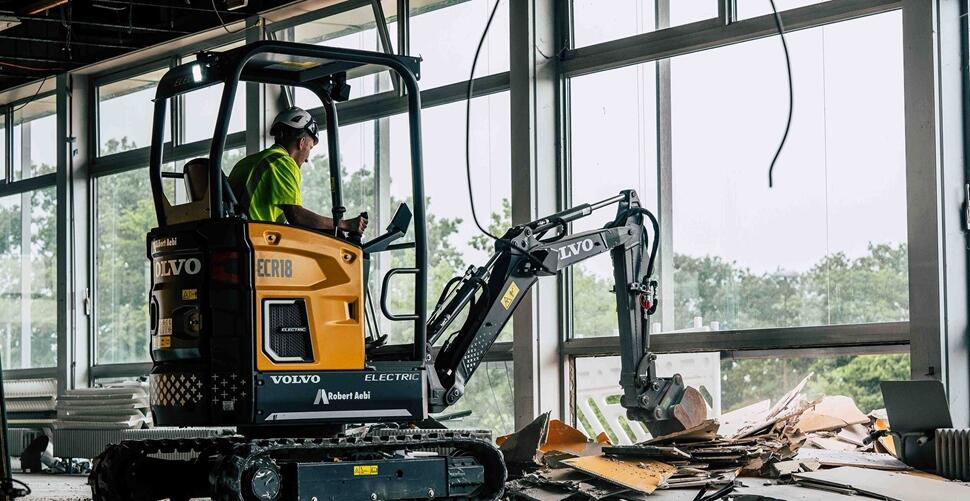
 The Volvo ECR25 Electric can be transported with up to three buckets on a standard 3.5 tonne trailer, making transport planning simpler for many contractors.
5. What attachments do you need?
The machine is only part of the equation. To get the best results, you need the right combination of machine and attachment.
Attachments are one of the main reasons compact equipment is so versatile. By changing attachments, the same machine can perform a wide range of tasks, helping contractors maximize productivity and reduce the need for additional equipment. Buckets, breakers, forks, grapples, thumbs, grading attachments and other specialist tools can significantly expand what a compact machine can do. Compact machines equipped with quick couplers allow attachments to be changed quickly and easily on site.
Before renting, consider not only the machine you need today, but also whether different attachments could help you complete multiple tasks with the same piece of equipment. Rather than simply requesting a specific attachment, explain to the rental provider what you need to accomplish. They may be able to recommend a more effective combination of machine and attachment for the task. A final check is to confirm that any required attachments are available from the rental company and compatible with the machine you’ve selected.
6. Should you rent a diesel or electric?
When deciding between a diesel or electric machine, the most important consideration is which option best suits the project requirements.
Consider how and where the machine will be used. Diesel may be the practical choice for remote sites or long operating periods where charging is difficult, while electric can be particularly suitable where low noise or zero tailpipe emissions are important.
The right choice depends on the project, working environment and access to charging rather than one technology being better for every application. Contractors should not assume that choosing electric means compromising on performance or productivity.
For a more detailed comparison of the two options, see our Diesel vs Electric Compact Equipment Guide.
Renting can also be a practical way to experience an electric machine in your own application before making a longer-term investment.
7. What’s actually included in the rental?
The advertised daily or weekly rental rate may not tell the whole story. Before confirming a rental, make sure you understand what is included in the package and whether there are any additional costs or requirements.
Depending on the rental provider and the equipment being hired, it may be worth checking arrangements for delivery and collection, attachments, fuel or charging responsibilities, insurance and damage cover, cleaning requirements, usage or operating hour limits, and breakdown support. It is also worth considering how long you realistically need the machine and how extensions, early returns or additional operating hours are handled. Understanding these details upfront can help avoid unexpected costs and ensure there are no surprises during the rental period.
Before the machine arrives, make sure you know who to contact if something goes wrong and what level of support is available. Ask how breakdowns are handled and what happens if a replacement machine is needed. If the machine is unfamiliar, it’s also worth checking what handover, operating guidance or familiarization is provided. Responsive support can be just as important as the rental rate when keeping a project on track.
Understanding the complete rental package will help you compare rental options on a like-for-like basis and select the provider that best meets your needs.
There is no single compact machine that’s right for every project. The best choice depends on the job, the site conditions, transport requirements, attachments and whether diesel or electric is the better fit.
Asking the right questions before renting can help you avoid costly mistakes, improve productivity and keep projects running smoothly.
Choose the machine that best fits the job — not simply the biggest machine or the lowest rental rate.

Explore the Volvo compact range
See the full range of compact excavators and wheel loaders and find the machine that best fits your application.

Talk to your local dealer
Need help choosing the right machine, attachments or configuration for your job? Your local Volvo dealer can help you find the best fit for your project.

Diesel or electric?
Not sure which power source best fits your application? Compare the key considerations for diesel and electric compact equipment.


