Guides & advice
How to get more from your compact excavator: Tips to boost productivity and performance
A compact excavator is a versatile machine designed to deliver productivity across a wide range of applications. But getting the most from your machine involves more than simply putting it to work. The right operating habits, attachments and maintenance routines can help improve efficiency, reduce operating costs and keep the machine performing at its best.
Whether you’re digging foundations, landscaping, handling materials or carrying out utility work, a few simple steps can help you get more from every shift.
Whether you’re digging foundations, landscaping, handling materials or carrying out utility work, a few simple steps can help you get more from every shift.

Getting the most from a compact excavator starts with using the machine correctly, selecting the right attachments for the job and carrying out regular inspections and maintenance. Small actions each day can help maximize productivity, reduce downtime and support long-term performance.
Follow these practical tips alongside your machine’s operator manual and maintenance schedule.
1. Work smarter with good operating habits
Compact excavators are built for demanding work, but everyday operating habits can make a significant difference to their efficiency, productivity and reliability. Planning your work sequence to minimize tracking and repeated movements can improve productivity, while reducing fuel use and unnecessary wear. Smooth, controlled movements can also help you work precisely. Think ahead about where to position the machine, where excavated material will go and how to minimize repeated repositioning.
Avoid working the machine harder than the task requires, travelling at excessive speed over rough ground or leaving the engine idling unnecessarily to reduce fuel use.
Make use of your machine's available settings to match performance to the task. For example, the Volvo ECR58 features an ECO mode designed to reduce fuel consumption, while adjustable auxiliary hydraulic flow settings allow operators to tailor performance to different attachments. Always refer to the operator's manual for the recommended settings.
Regularly grease the machine, check fluid levels and get to know the equipment so you can recognize when something isn’t right. Dealer or customer training can also help operators use and care for the machine correctly.
Good operating habits can help improve efficiency throughout the day, while reducing unnecessary fuel consumption and machine wear.
2. Set up the machine for the job
Getting the most from a compact excavator starts before work begins. Taking a few minutes to set up the machine correctly can help improve productivity, efficiency and safety throughout the day.
Check that the chosen attachment is approved for the machine and suitable for the task. Review any hydraulic requirements and adjust the machine’s controls and settings in accordance with the operator’s manual.
When working in confined spaces, plan the machine position, excavation sequence and material-handling process in advance to minimize unnecessary movements and repositioning, and keep the work area organized. Prioritize stable positioning, good visibility and safe working distances.
A little planning before work starts can help reduce cycle times, fuel consumption and unnecessary wear on the machine.
3. Make the most of the right attachments
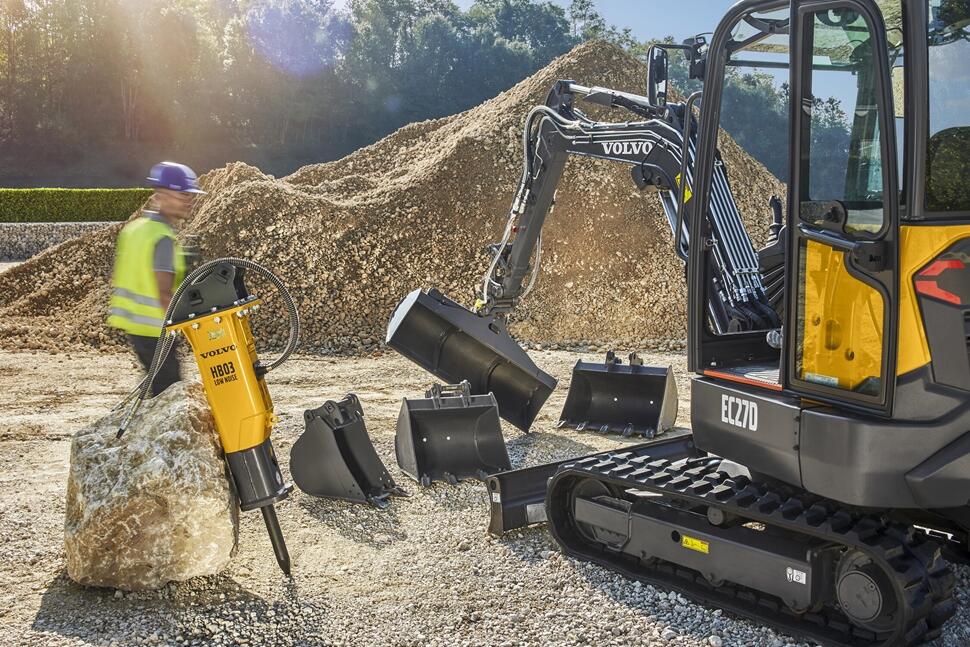
One of the biggest benefits of a compact excavator is its versatility. Buckets, hydraulic breakers, thumbs, tiltrotators, augers, compactors, grapples and many other attachments can help a compact excavator tackle a wide range of applications, from demolition and landscaping to materials handling, forestry and utility work.
Even when using a bucket, there are a variety of options designed for different tasks, including digging, grading, trenching and ditch-cleaning buckets. Choosing the right bucket or other attachment for the job can improve productivity, precision and efficiency. For more information on selecting the right attachment, read our guide to compact excavator attachments.
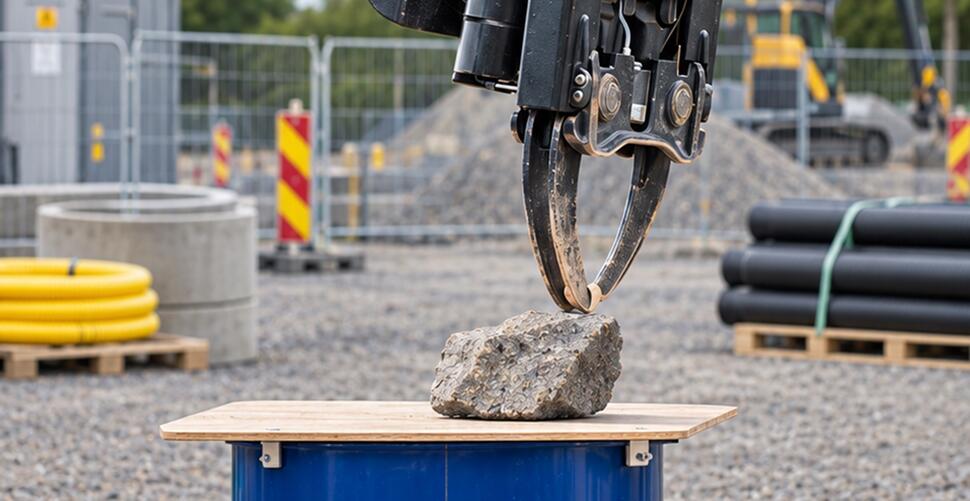
A tiltrotator with an integrated gripper is a very versatile option that I recommend. It offers a wide range of applications, combining precise work with the ability to rotate the attachment and handle materials without leaving the machine. This can be particularly useful when clearing and sorting different types of debris following extreme weatherevents.
Before choosing an attachment, check that it is approved for the machine and compatible with its coupler, hydraulics and operating capacity. A well-matched attachment can make a task more efficient, while the wrong setup may reduce performance or create safety risks. The operator’s manual and attachment documentation are the best places to confirm compatibility.
4. Keep your excavator ready for work
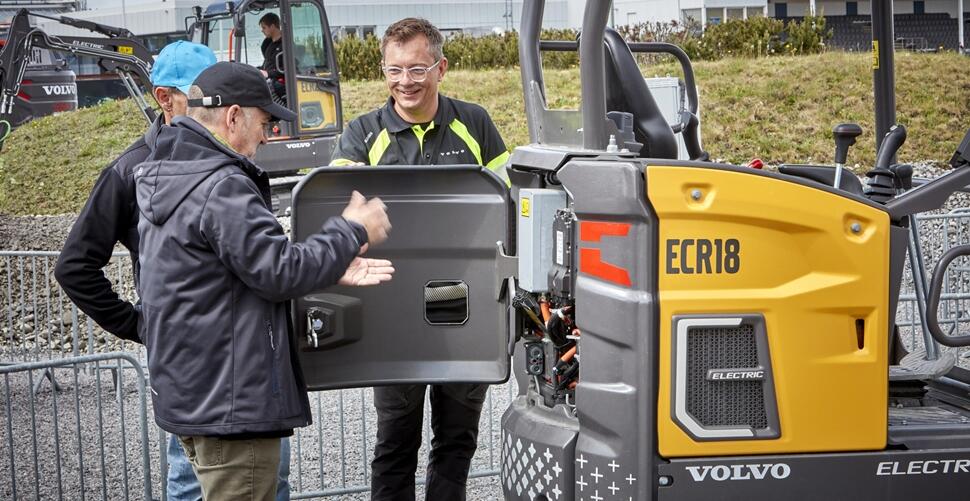
A short walk-around inspection before starting work can help identify issues before they affect productivity or cause unplanned downtime. Taking a few minutes to check the machine each day can help keep it operating safely and efficiently. Daily checks should be based on the specific machine and the requirements set out in the operator’s manual, but should typically include:
- Visible leaks or signs of damage
- The condition of the undercarriage and attachment
- Safety devices, lights and controls
- Engine oil, hydraulic fluid and coolant levels, where applicable
- Pivot points and slewing rings as specified in the manual
The important daily checks are to verify oil, hydraulic-fluid and coolant levels, grease the pivot points and slewing rings, and keep up with scheduled oil changes and hydraulic, engine and fuel-filter replacements.
If you find damage, a leak, an active warning or anything that you cannot identify, follow site procedures and the manufacturer’s guide before continuing. Always refer to the operator’s manual for machine-specific inspection and maintenance requirements.
Daily checks are only part of the picture. When work is busy, it can be tempting to put off routine maintenance or assume a quick visual check is enough. However, regular maintenance also plays an important role in keeping a compact excavator operating efficiently and reliably.
Tasks such as cleaning debris from the machine, checking track condition and tension, lubricating required points, and servicing filters and fluids on schedule can sometimes be overlooked. What maintenance is required, and how often, will depend on the machine and its operating conditions.
Cleaning the machine matters. Dirt and mud can reduce thermal efficiency and make it harder to spot leaks early. Keeping the machine clean helps you identify problems sooner and maintain its performance.
Maintenance check:
- Machine cleaned of dirt and debris
- Tracks inspected for condition and tension
- Service points greased as required
- Filters and fluids serviced according to schedule
- Additional checks carried out after demanding or dusty work
The same principles apply to compact electric machines, although the specific inspection and maintenance requirements differ from those of diesel-powered machines. Always follow the relevant machine-specific guidance.
Neglected maintenance can contribute to premature wear, reduced performance, unplanned downtime and more costly repairs. Follow the recommended schedule, and when in doubt, refer to the operator’s manual and manufacturer guidance.
Plan the work sequence, operate smoothly, select an approved attachment suited to the task and follow daily inspection and scheduled maintenance requirements. Using the right operating techniques and machine settings can help improve productivity, reduce fuel consumption and minimize wear. Different machine features, controls and operating modes may also help improve efficiency, depending on the model.
Daily checks should follow the operator's manual but typically include looking for visible leaks or damage, checking the condition of the undercarriage and attachment, inspecting safety devices, lights and controls, and verifying engine oil, hydraulic fluid and coolant levels.
The most suitable attachment depends on the application, but options such as tiltrotators, grapples, hydraulic breakers, augers and specialist buckets can significantly expand the range of tasks a compact excavator can perform. Always check attachment compatibility before use.
Tasks such as cleaning dirt and debris from the machine, checking track condition and tension, lubricating service points, and servicing filters and fluids at the recommended intervals are often overlooked. Neglecting these tasks can reduce performance and increase the risk of unplanned downtime.
Get more from every working day
Getting the best performance from a compact excavator comes down to a combination of good operating habits, the right attachments, regular inspections and consistent maintenance. By taking a few minutes each day to care for the machine and following the manufacturer’s recommendations, operators can improve productivity, maximize uptime and help extend the life of their equipment.


