Getting started with compact electric machines: a practical guide
If you’re preparing to add electric machines to your fleet, a little planning can help ensure a smooth and successful transition. While every customer, jobsite, application and industry is unique, there are some practical steps you can take to help get started.

1. Understand your application
Before selecting an electric machine, take a close look at how your equipment will be used. Rather than focusing on the total length of the working day, consider how much of that time the machine is actively working and when natural breaks or idle periods occur.
A few useful questions to consider are:
- What does a typical day look like?
- How many hours on average will you want the machine to operate?
- What tasks will it mainly be used for?
- How much time might it typically spend idling?
- How far will the machine typically travel on site?
- What opportunities are there to charge during the day?
Many compact machines spend a significant part of the working day idling. Unlike a diesel machine, an electric machine does not consume energy while it is stationary and not working. This means that the runtime you need may be quite different from the total length of the working day.
Understanding your real operating requirements will help you choose a machine and charging approach that fits the way you work.
2. Plan the charging strategy early
One of the most important aspects of running compact electric machines is charging. Ask yourself:
- How will the machine be charged?
- Do multiple machines need charging simultaneously?
- Is sufficient electrical power already available on site?
- When will charging take place?
- Is fast-charging capability needed?
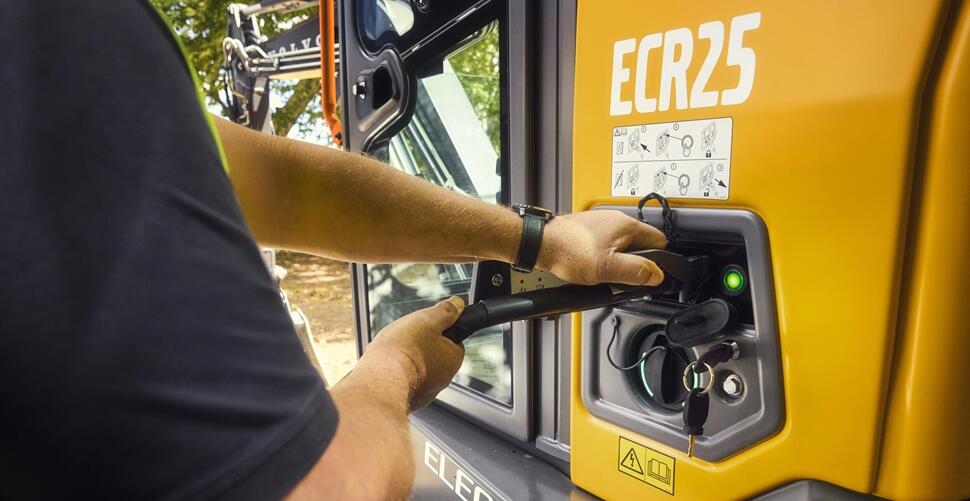
Start with the power supply and charging window you already have available. For some applications, overnight charging is all that’s required to support a full day’s operation. Higher-utilization work may benefit from opportunity charging during breaks or a faster charging solution. The right set-up depends on how and where the machine is used.
On many jobsites, power is already available. Construction sites often have temporary power supplies for site offices, welfare facilities, lighting, security systems and other equipment, while workshops and depots may also have power.
Today’s charging options are more flexible than ever, including standard AC charging from existing site power supplies, dedicated charging stations, mobile charging units that can be transported around the jobsite, battery energy storage systems that provide charging where grid access is limited, mobile charging vans that come to the site when needed, as well as fast charging solutions for higher utilization applications.
The key principle is that power should come to the machine, not the other way around.
This can reduce unnecessary machine movements, simplify site logistics and provide greater flexibility when managing multiple pieces of equipment.
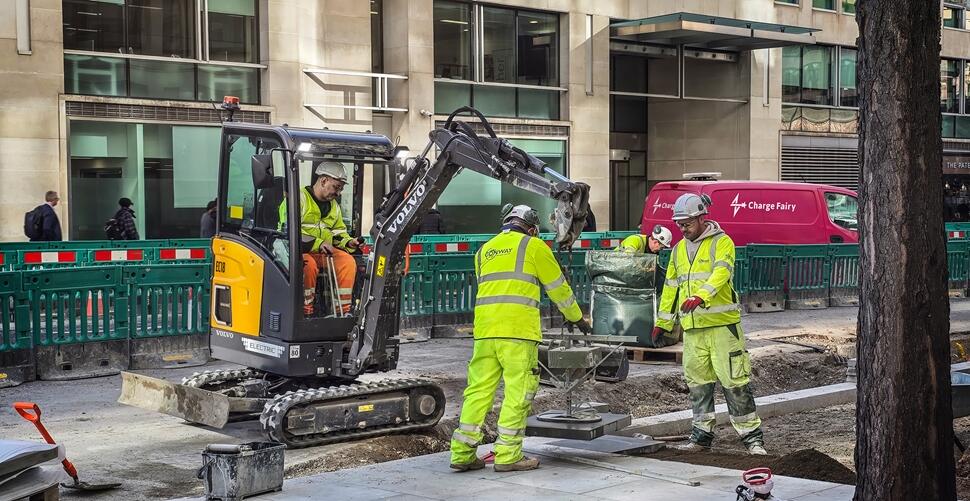 Mobile charging solutions bring power where it's needed, helping keep machines working
3. Train operators on electric machine behavior
While compact electric machines are generally easy to operate, there are some differences to diesel-powered equipment. Operator engagement from the outset is key to a smooth transition to electric equipment.
One of the first things operators notice is how responsive compact electric machines feel and how quiet they are. Electric motors deliver maximum torque instantly, providing smooth and immediate power when digging, lifting or travelling around site. This means operators have precise control and rapid response as soon as they engage the controls.
For operators who are unfamiliar with electric equipment, getting behind the controls is often one of the most effective ways to build confidence. Initial scepticism about whether an electric machine can deliver the required performance often disappears once operators experience its instant torque, smooth control and low noise levels in real working conditions.
It can also be valuable to start with operators who are open to trying electric equipment and willing to adapt to a slightly different way of working. Positive experiences can spread quickly within a team as operators share what they have learned with colleagues and demonstrate what the machine can do. Building this early operator buy-in can help crate confidence across the wider team and support a smoother transition to electric equipment.
4. Don’t forget maintenance and servicing
While compact electric machines require less day-to-day maintenance than diesel machines, they still require regular servicing and routine checks to keep them healthy, reliable and operating at their best.
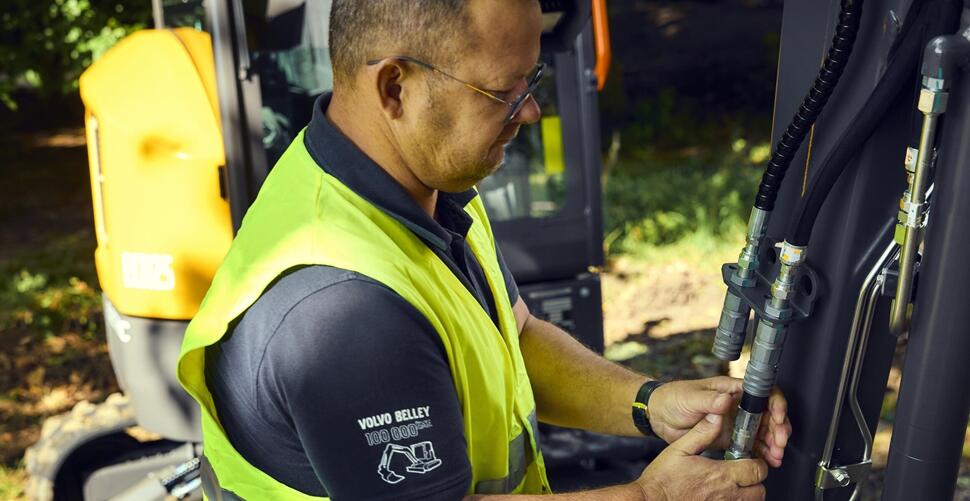
Just like diesel machines, it’s important to monitor hydraulic systems, tracks and tires, attachments and cooling systems, as well as electric connectors and charging cables. This will ensure the machine delivers optimum performance.
It’s also worth understanding the support available throughout the machine’s lifecycle. Ask your dealer about battery warranty, battery health monitoring, servicing requirements and the support available for charging equipment as well as the machine itself. Digital services can also provide useful insights into machine usage, charging and performance, helping you manage the machine more effectively over time. Having the right support network in place can help maximize uptime and simplify the transition to electric equipment.
5. Consider whether renting or buying makes sense
For customers new to compact electric machines, whether to rent or buy the machine is an important decision. The answer will depend on your unique requirements and circumstances.
Renting can be an excellent way to gain hands-on experience with electric compact machines in your own application. It allows operators, site managers, and fleet owners to understand charging requirements, evaluate performance, and build confidence in the technology before making a longer-term investment. It can be ideal if the machine is only needed for a specific project or short-term contract. It’s also an effective way to ensure flexibility as electrification technology continues to evolve.
However, buying may be the best option for businesses that regularly use compact equipment, have predictable utilization rates, already have access to suitable charging infrastructure and want to maximize long-term operating cost savings.
Many companies begin by renting an electric compact machine for a project and quickly discover that concerns around performance, charging and productivity are unnecessary. That practical experience often provides the confidence needed to make future purchasing decisions much easier.
6. Start with the applications where electric is easier to implement
If electrification is new to your organization, consider starting with one machine in a suitable application. This allows your team to gain first-hand experience, understand charging requirements and learn about new ways of working. It’s also a good opportunity to gather performance data that will enable you to make informed decisions about future investments.
Starting small can also help teams understand how electric equipment fits into their daily operations. Moving to electric does not necessarily require major changes, but it may involve thinking differently about when and where a machine is charged rather than trying to replicate diesel-powered routines exactly.
Building confidence before expanding the fleet is a sensible way to start your electrification journey.
Applications where noise and emissions are already important considerations can often be an ideal place to begin, allowing organizations to experience the benefits of electric equipment while addressing specific site requirements.
Many businesses find that once operators and site managers become familiar with electric equipment, wider adoption becomes a much easier decision.
Compact electric machines are practical, productive tools that are already delivering value on jobsites around the world. By understanding your operating requirements, planning charging infrastructure and training operators, you can make the transition with confidence and start realizing the benefits.
It’s also important to look beyond the machine itself and consider the opportunities electrification can create. The combination of zero tailpipe emissions and reduced noise can open doors to projects that may be difficult to access with conventional equipment, such as urban construction, residential developments, indoor applications and near schools, hospitals and environmentally sensitive locations.
Businesses that adopt compact electric machines will be well positioned to meet customer expectations, regulatory requirements, and sustainability goals while maintaining strong operational performance and potentially accessing new opportunities where low noise and zero tailpipe emissions are key project requirements.

Explore Volvo electric machines
See the full range of electric equipment and find the machine that fits your application.

Learn more about going electric
Find practical information on the benefits of electric equipment, charging, operation and what to consider before making the switch.

Talk to us about going electric
Thinking about going electric? Whether you have questions about charging, applications or choosing the right electric machine for your needs, your local Volvo CE dealer is here to help.


