Guides & advice
How to transport your compact excavator: A practical step-by-step guide
Compact excavators are designed to be transportable. That’s one of the things that makes them so versatile. Whether you’re moving between jobs or transporting a newly hired machine to site, proper preparation is essential. Taking the right steps before, during and after transport helps protect the equipment, improves safety and ensures the machine arrives ready to work.
Transporting a compact or mini excavator safely involves checking the total load weight, ensuring the trailer and towing vehicle are suitable, preparing the loading area, positioning the machine correctly and securing it using approved tie-down points and restraints. Before departure, final checks help confirm the machine, attachments and trailer are ready for transport and that the load is properly secured.
Follow these practical steps alongside the guidance in your machine’s operator manual and any applicable local transport regulations.
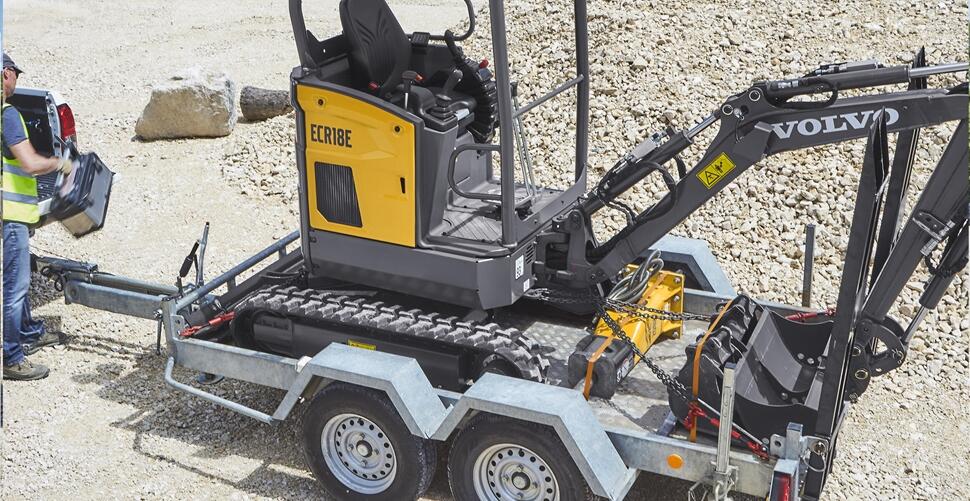
1. Check the weight of the machine
The first step is to check the weight and dimensions of your compact excavator to make sure your trailer and towing vehicle have sufficient capacity. Remember to include the weight of any additional attachments or equipment being transported. Make sure the total load is within the trailer’s payload capacity and applicable axle and towing limits. Don’t forget to consider any local weight or size restrictions that may affect your journey.
Key checks:
- Machine operating weight
- Width and height
- Weight of any attachments being transported
- Trailer payload rating
- Vehicle towing capacity
- Whether your licence, vehicle and trailer combination comply with local transport regulations
- That the trailer and towing vehicle can safely support the load, including axle and tow hitch limits
2. Inspect the trailer and transport vehicle
Before loading the excavator, it’s important to carry out some key checks on the trailer and transport vehicle. Doing this before loading can help prevent delays and ensure a swift and safe delivery.
Check:
- Tire condition and pressure
- Lights and indicators
- Trailer brakes
- Ramp condition
- Tie-down points
- Tow hitch connection
- The loading ramps are secure, can support the machine's weight and that the trailer is stable
- The straps and chains are in good condition and strong enough to secure the machine
3. Prepare the compact excavator for loading
Before driving the excavator onto the trailer:
- Remove excess mud and debris from the tracks
- Secure any loose items
- Fold mirrors or accessories if required
- Check for leaks or damage
- Retract the boom and attachments where possible
- Check that any fitted attachments are properly secured and positioned correctly for transport
4. Load the machine carefully
Choose firm, level ground for loading where possible and make sure the trailer is stable and cannot move. Keep other people clear of the loading area. Fasten your seatbelt before operating the excavator, then line up the machine with the trailer’s ramps and drive up slowly and steadily. Avoid sudden acceleration or steering movements. Position the excavator correctly on the trailer to ensure the load is properly distributed, and the trailer remains stable during transport. Always follow the trailer and machine manufacturer's recommendations for loading and positioning. Maintain three points of contact when entering or exiting the machine. Before driving onto the ramps, check that they are securely positioned and that the loading area is clear of bystanders.
5. Prepare the excavator for travel
Once positioned correctly on the trailer:
- Lower the bucket or attachments to the trailer bed
- Apply the parking brake
- Secure the upper structure to prevent unwanted rotation during transport
- Switch off the engine and remove the key
- For long-distance transport, check whether the operator’s manual calls for the battery disconnect switch to be turned off
- Ensure all cab doors, engine covers and access hoods are securely closed and locked
- Use appropriate chains or straps secured to the designated tie-down points. Cross the restraints in an X-pattern to help prevent movement during transport
- Ensure the bucket or other attachments are securely tied down separately
Why this matters: the excavator, upper structure and attachments must remain secure under braking, cornering and road movement. Always use the specified transport restraints and tie-down points. Hydraulic pressure alone should not be relied upon to secure the machine or its equipment during transport.
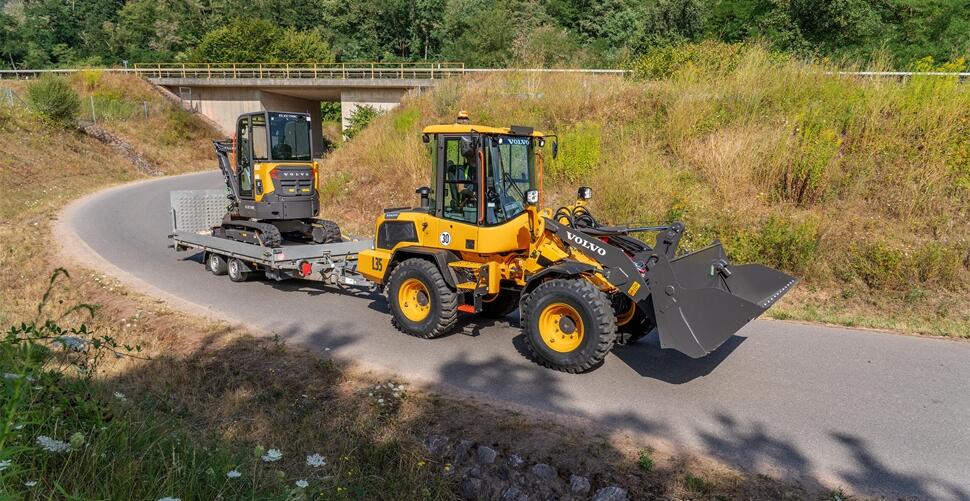
6. Carry out final checks before departure
Before setting off, perform a final walk-around inspection. Re-check that all straps and chains are properly tensioned, the cab doors, engine covers and access hoods are closed and that the trailer ramps are stowed away. Confirm that the load position is correct, the machine and attachments cannot move, the trailer is within its permitted weight limits, and lights and number plates are not obstructed. A quick walk-around before setting off can help identify any potential issues that could be a safety hazard on the road.
Final check: Trailer and vehicle limits confirmed; machine and attachment restraints secure; ramps stowed; covers and hoods closed; loose equipment secured; load correctly positioned and free from anything that could shift during transport.
7. Drive with the load in mind
It goes without saying, but towing plant equipment requires a different approach to driving. Because of the additional weight, stopping distances will be greater, and the added length of the trailer requires a wider turning circle. Take extra caution on uneven roads, roundabouts and on sharp bends. Reduce speed where appropriate. On longer journeys, it’s a good idea to stop and check the load.
8. Unload safely at the job site
Once you arrive at the next job site, unloading the compact excavator also requires care and consideration. Try to park on level ground, carefully remove restraints, ensuring that nothing has moved during transit. Lower the ramps on the trailer fully. Fasten the seatbelt before starting the excavator and releasing the parking brake. Reverse slowly down the ramp.
Reconnect the battery system if required and carry out a thorough inspection of the machine before use.
Choose a trailer whose permitted payload and dimensions can accommodate the excavator’s transport weight, including any buckets, attachments and other equipment being carried. Also check trailer axle limits, towing-vehicle capacity, licence requirements and local transport rules.
Position the machine in accordance with the operator’s manual and trailer manufacturer’s recommendations. Lower and secure the boom, bucket and any other equipment as specified, then attach appropriately rated restraints to the designated tie-down points. Secure any separate buckets or attachments and check that all restraints are properly tensioned before departure.
Common errors include exceeding weight limits, incorrect load distribution, damaged or incorrectly fitted restraints, unsecured attachments, skipping final checks, and failing to follow seatbelt and safe-access procedures. Transporting compact excavators is straightforward when the correct procedures are followed. Taking the time to inspect equipment, load and secure the machine properly and carry out final checks before departure can help reduce risk, prevent damage and ensure the machine arrives ready to work.


