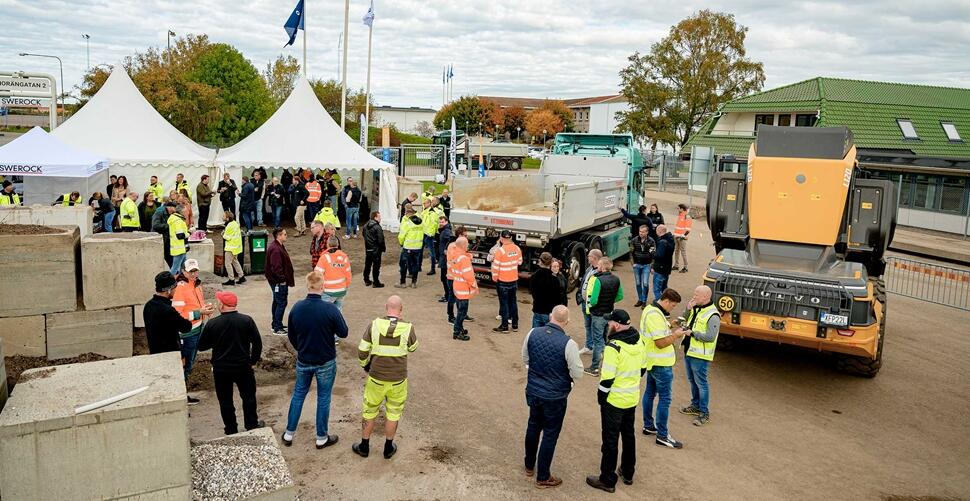
Quieter, more affordable, and cleaner as Swerock tests electric machines in Helsingborg, Sweden

For Swerock, part of the Peab Group, climate impact is a central business priority. Emissions across the entire value chain must be addressed — from raw material extraction and manufacturing to contracting and end use. In this trial, the focus was on electrified work machines and transport.
Immediate and clear results in production
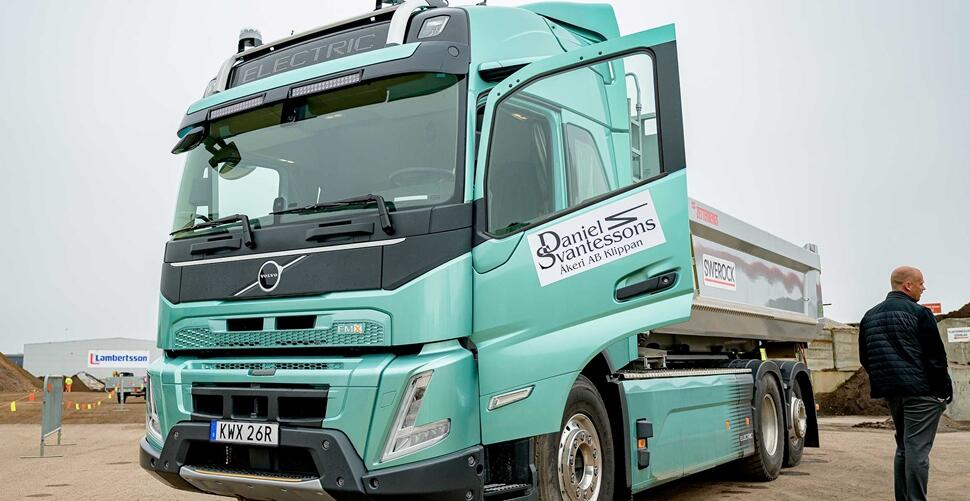
A diesel wheel loader and truck were replaced with fully electric equivalents from Volvo. The machines were used in day-to-day operations handling soil and aggregate materials and transporting them to construction and civil engineering projects. The trial was carried out in collaboration with one of the City of Helsingborg's projects on Växjögatan.
During the trial period, CO₂ emissions were reduced by approximately 14 metric tons, while energy costs dropped to around one-third compared with operating on HVO100 diesel.
Valuable insights into how electric machines perform in real conditions
Christian Lindgren, Head of Department Raw Material Supply at Swerock Region South, highlights the value of testing the technology in real-world conditions: "For us, the trial provided valuable insights into how electric machines perform in real conditions, what it takes for them to become a natural part of our production, and how we can continue to drive electrification forward in the industry.”
Linus Delin, Operations Manager responsible for civil engineering transport at Swerock, was also very satisfied with the outcome: "We were able to charge the machines during planned breaks and integrate this into production without affecting the pace. Electrified machines work particularly well in terminals and quarries where work patterns are predictable, making it easy to plan charging efficiently.”
Beyond the climate and cost benefits, the electric machines contributed to a noticeably quieter working environment — making them especially suitable for urban settings.
Volvo and the City of Helsingborg: electrification enters a new phase
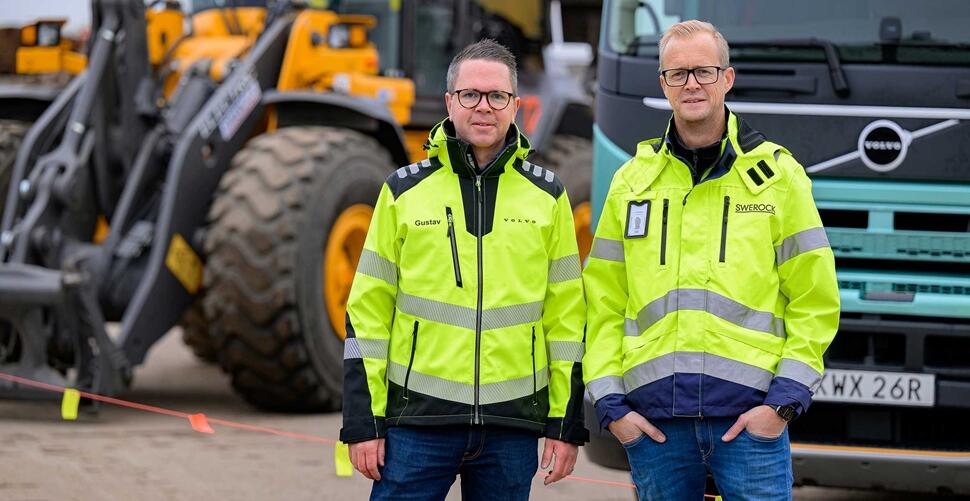
Gustav Boberg, Segment Leader at Volvo CE, sees the trial as a clear signal of where development is heading: "It was an important trial for several reasons. It shows that electrification is now entering a new era, where we are seeing several new electric models come to market. These are no longer prototypes — they are electric machines in series production. We also see that cities play a key role and are driving the transition toward electrified construction and civil engineering projects.”
The City of Helsingborg is a signatory of Fossil-Free Sweden's initiative for zero-emission civil engineering contracts:
"We have high climate requirements and are working to reduce emissions and achieve climate neutrality by 2030. That means we as clients also need to help drive development forward. We have to be willing to try things and absorb the costs," said Henrik Rosdahl, Street Engineer at the Urban Development Administration.
Next steps: testing, evaluating, and scaling up
Swerock is now building on the experience from Helsingborg by testing the electric solutions in more real-world projects and scaling up where the impact is greatest. The trial forms part of the company's long-term efforts to reduce emissions from material production, logistics, and transport.
The work also aligns with the Peab Group's electrification strategy. In recent years, the Group has electrified several parts of its operations, including becoming the first in Sweden to offer a fully electric asphalt paving crew.
Facts:
Location: Swerock's distribution terminal, Helsingborg Sweden.
Period: October–November 2025 (8 weeks).
Purpose: Evaluate electric machines in daily operations for material handling and transport to construction projects in an urban environment.
Execution: Diesel wheel loader and truck replaced by a Volvo L120 Electric and Volvo FMX Electric.
Results: 14 metric tons lower CO₂ and approximately SEK 40,000 lower energy costs compared to diesel. The machines could be charged during planned breaks without affecting operational productivity. Electric machines performed well in a terminal environment.
Parties involved: Swerock, Volvo Construction Equipment, Volvo Trucks, Swecon, and Daniel Svantesson's Åkeri AB.