5 Ways Haul Truck Operators Can Extend Component Life

Regardless of the application, the stakes are high. In mines and quarries, where operations are continuous, uptime is the most critical asset. In building and infrastructure, margins are tight, and a single breakdown can trigger a snowball effect that threatens project deadlines.
This is where your operators become your biggest competitive advantage. Smart operating habits don’t just save fuel; they protect the drivetrain, suspension and hydraulics, ensuring your off-road dump trucks are ready to work when they’re needed most.
Here are five simple ways operators can help extend component life and keep your fleet moving.
1. Make smooth transitions to save the brakes. We’ve all felt the rush of a busy site, where the pressure’s on to move material as fast as possible. This can sometimes lead to “jackrabbit” starts — flooring the accelerator followed by hard braking. While it might feel faster in the moment, it often leads to driveline shock and premature brake wear.
It might sound backward, but the smoothest operators usually move the most material by the end of the shift. Plus, anticipating stops and letting the truck coast into loading or dumping zones minimizes the heat and wear on service brakes.
This is where understanding your machine’s features becomes a huge advantage. As an example, Volvo articulated dump trucks are equipped with a retarder designed specifically to control speed on grades. Using the retarder isn’t just a safety measure; it does the heavy lifting so the service brakes stay cool and fresh, preserving them for when they’re truly needed.
2. Let the transmission do the thinking. There’s definitely a time and place for manual gear shifting, especially in tricky terrain. However, constantly hunting for gears or overriding the system can inadvertently overheat components and shorten transmission life.
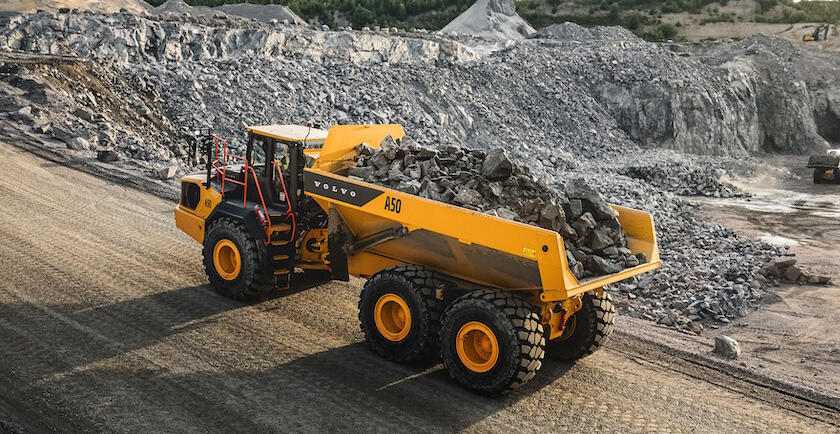
Modern transmissions are designed to calculate the perfect shift point for both power and efficiency. It’s often best to let the machine do the thinking in standard driving conditions. This is where systems like Volvo Dynamic Drive come in. It’s engineered to optimize gear selection automatically. This helps reduce mechanical stress on the engine and transmission, allowing your operators to focus more on the road and less on the RPMs.
3. Find the sweet spot for your payloads. There’s a fine line between productivity and strain. Underloading a rock truck, for example, hurts your cost-per-ton efficiency, but overloading it can be even costlier in terms of repairs. Consistently exceeding payload limits places immense structural fatigue on the chassis, suspension and tires. Plus, overloaded trucks will tear up your haul roads much faster, which ends up slowing down the entire fleet.
Consistency is key, but it can be hard to judge by eye alone. This is why utilizing available technology is so important for component life. For instance, our On-Board Weighing system provides visual cues to both the hauler and the excavator or wheel loader operator. It helps them hit the sweet spot every time — avoiding the damage of overloading and the inefficiency of underloading.
4. Protect the tires. Tires are often one of the highest operating costs for a haul fleet. A cut tire costs money to replace and pulls your hauler out of the cycle, halting production.
Site awareness is critical here. Avoiding spillage in loading zones is one of the best ways to prevent tire cuts. Additionally, managing cornering speeds helps prevent heat buildup that degrades the rubber.
 Technology can be a helpful second set of eyes here. For example, tire pressure monitoring systems do more than just check for flats. Our TPMS, for instance, monitors both pressure and temperature — which is extremely important in long-haul applications to stop heat-related blowouts before they cause a day of downtime. On a broader scale, site managers can use site mapping technologies to set restricted speed zones, automatically helping operators manage speed in high-risk areas to preserve tire health.
5. Let your articulated haulers properly cool down. At the end of a long shift or a heavy haul, it’s natural to want to park the truck and shut it off immediately. But shutting down a hot engine too quickly traps extreme heat and can damage the turbocharger.
Allowing the engine to idle for a few minutes allows it to cool down properly, extending the life of these critical components. To support operators in this, use machines that feature an engine auto shut down. Volvo machines come with this feature, and it acts as a safety net by keeping the engine running for the necessary cool-down period, even if the key is turned off. This ensures the turbo is protected every time.
The Bottom Line
Operators are the unsung heroes of the jobsite and the first line of defense against downtime. Investing in refining these techniques pays off by ensuring your fleet is reliable, predictable and ready for the next load.
It’s also worth noting that even with the best operation, parts eventually wear out. When they do, programs like Volvo Reman can give those components a second life, offering like-new performance at a fraction of the cost — but the goal is always to delay that need as long as possible through smart driving.
Whether it’s through heavy equipment simulator training or simply utilizing the assist features already in the cab, taking care of your fleet ensures the fleet will take care of your schedules.

