
Download photos
Customer stories
Volvo EWR150 Electric takes on sensitive water infrastructure project in Luxembourg
When construction work is taking place close to drinking water sources, reducing environmental risk becomes a top priority. At Geyershof in Luxembourg, the Volvo EWR150 Electric is helping Elenz complete critical water infrastructure work while eliminating the need for on-site refueling and delivering the performance operators expect.

Located within a groundwater protection zone, the project involves consolidating several natural springs and channeling them into a planned water reservoir. In an environment where even small fuel spills or leaks could have serious consequences, Elenz needed a machine that could minimize contamination risks without compromising productivity.
For such sensitive applications, the options are typically limited to machines running on bio-oil or electric power. Having already gained positive experience with a Volvo EC18 Electric compact excavator at its quarry operation in Luxembourg, Elenz chose the newly launched Volvo EWR150 Electric for the job.
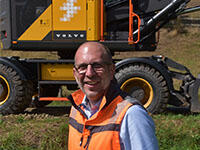
“Going electric is not a regulation, but a requirement for this particular job,” explains Christoph Schommer, Managing Director of Elenz.
Quiet, clean and ready to perform
The EWR150 Electric was put straight to work at the Geyershof construction site, requiring little time or adjustment for operators already familiar with conventional wheeled excavators. Alongside removing the need for on-site refueling, the machine has brought additional benefits, including zero local exhaust emissions and a quieter working environment for both the crew and the surrounding area.
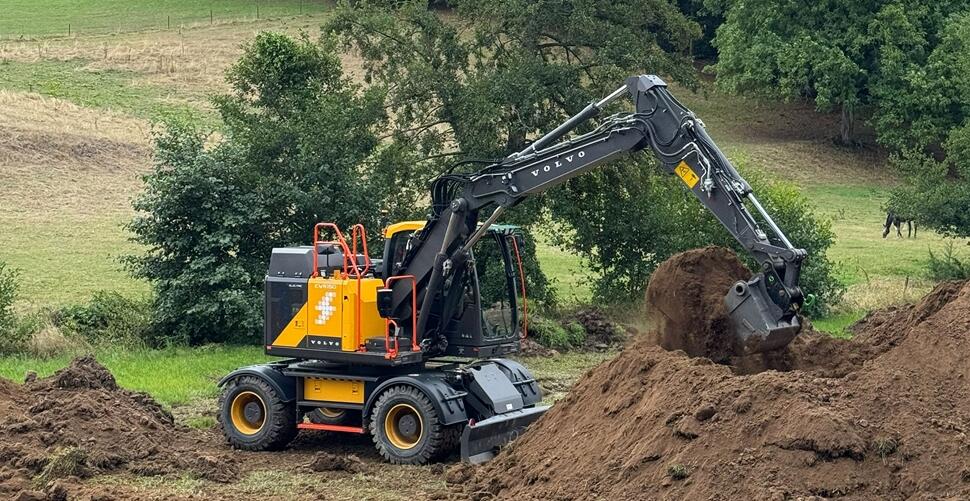
“We are thoroughly impressed by the EWR150 Electric,” says Christoph Schommer. “Its low noise level is a major advantage here. At the same time, the machine offers plenty of power and consistently delivers the same level of energy.
Those benefits are equally noticeable for operators. Thomas Weber, who previously worked with a conventional EWR150 wheeled excavator, says the electric model delivers the same performance while creating a more comfortable working environment.
“Sometimes I miss the sound of the engine, but the quieter operation of the EWR150 Electric is more beneficial for me personally. Compared to the diesel equivalent, I find the performance and power to be identical.”
Ready for a full day’s work
While charging is often a common concern when it comes to electric construction equipment, it has integrated seamlessly into daily operations at Geyershof.
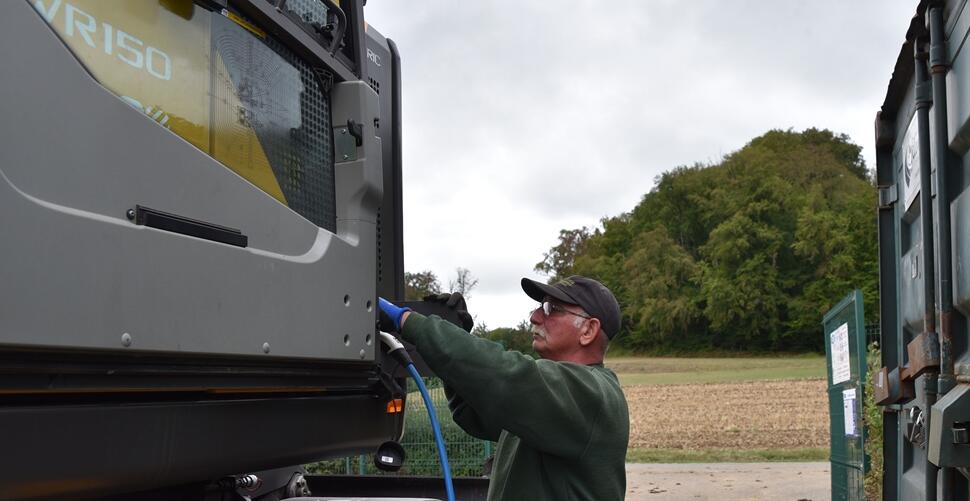
The EWR150 Electric is charged overnight using a 32-amp connection at a nearby sewage treatment plant, which also serves as the project office and a secure parking location for site equipment. By charging outside working hours, Elenz has been able to keep the machine productive without changing established working practices.
"The EWR150 Electric can be used anywhere there's a charging point," says Schommer. "Here, a single overnight charge lasts the whole working day."
Exploring future opportunities
Headquartered in Konz, Elenz employs around 230 people and operates primarily in civil engineering and road construction. Approximately two-thirds of its fleet consists of Volvo CE machines. Following the positive experience at Geyershof, the company now plans to use the EWR150 Electric on more demanding projects to further explore its potential applications.
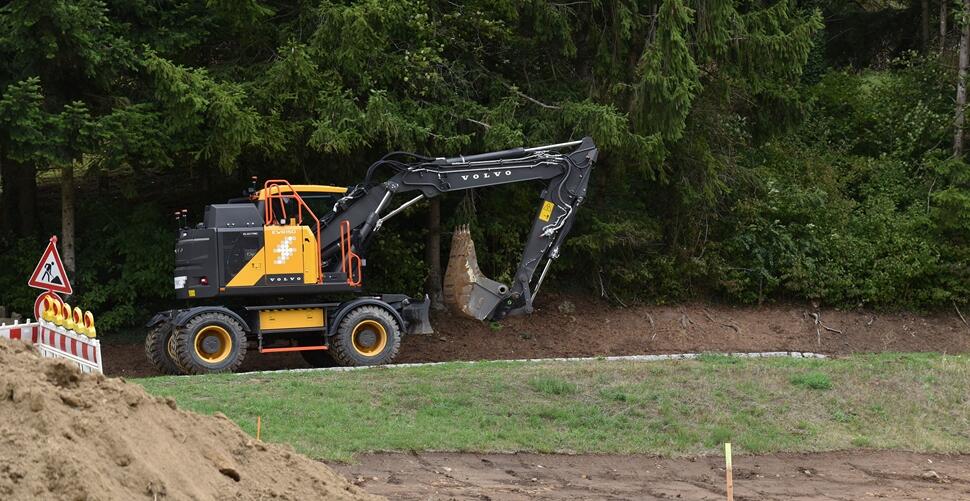
“Overall, the trial has shown us that electric drive is a capable and promising alternative for use in the construction and roadbuilding sector,” says Christoph Schommer.
For Henning Bäumchen, Development Engineer at Volvo CE, the project highlights how electric machines can be an ideal fit for environmentally sensitive applications.
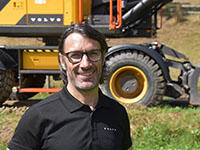
“We’re talking about a perfect match here. I can also see a future where guidelines for electric machines become regulations. In that case, owners of electric machines would have a clear competitive advantage.”
Download

For further information
Sandra Jansen
Media Relations & Communications Manager
Volvo Construction Equipment
Region Europa – Region International
E-mail: sandra.jansen@volvo.com


