Why heavy equipment technology is key to fighting operator burnout

Machine design is evolving to address this directly. By integrating onboard technology that automates routine tasks, modern heavy construction equipment takes the pressure off operators so they stay sharp, safe and productive all day.
Key takeaways
- Excavator machine control and semi-automation systems handle micro-adjustments to cut grading times by nearly half and give operators mental breathers.
- Real-time, in-cab coaching and guided controls give less experienced operators instant feedback on idling, shifting, braking and more to help bridge the skills gap without overwhelming them.
- Intelligent systems like OptiShift and Terrain Memory take the stress out of daily operations while protecting machine components from unnecessary wear.
Machine control eliminates manual math and guessing.
Constantly measuring, estimating and correcting is one of the quickest ways to drain an operator’s energy. Machine control systems like Volvo Dig Assist solve this by displaying real-time target grade data inside the cab.
As an example, digging a trench for a utility line used to require frequent stops to check grade or relying on a ground worker with a grade rod. Today, excavator machine control systems display exact depth, slope and heading guidance on an in-cab display. Much like GPS navigation in a car, the operator assist system guides them on exactly where to dig. The screen tracks the bucket’s position relative to the target grade so they can work continuously without manual checks.
In loading and quarry applications, underloading a haul truck wastes valuable cycle time, while overloading creates safety hazards and risks steep fines. Onboard weighing systems calculate material weight in the bucket before it ever reaches the truck bed. By eliminating mental math, operators can move smoothly from the pile to the truck without double checking target payloads. They can even use excavator boundary limits to set swing stops, taking the effort out of positioning the excavator between the pile and truck.
Semi-automation assists operators without taking over control.
Automating routine machine adjustments takes the physical and mental stress off the operator:
- Precision grading: Maintaining a flat grade across long passes requires precise coordination of an excavator’s boom, arm and bucket. Systems like Volvo Active Control automate these movements. Once target parameters are entered, the system automatically adjusts the boom and bucket while the operator simply pulls the arm lever. This removes constant micro-corrections and can reduce grading time by nearly half.
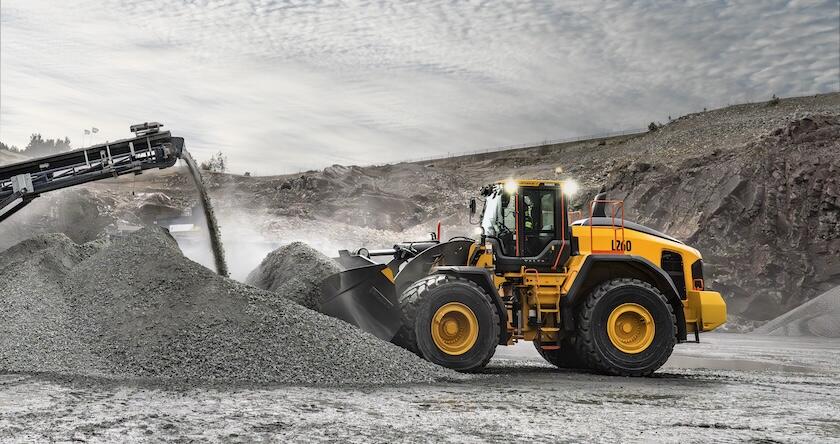
- Optimized bucket filling: Digging into a hard pile of aggregate requires delicate footwork and joystick maneuvering. Wheel loader auto bucket fill technologies automate this step by sensing pile resistance, driving the loader forward and then curling the bucket for an optimal fill. This standardizes the cycle, ensures a full bucket every time and gives the operator a quick mental break on every pass.
Smart drivetrains take the stress off both the machine and the driver.
Balancing speed with equipment care creates constant underlying stress. Heavy equipment operators are often pushed to maximize productivity while avoiding wear on things like brakes and transmissions.
Advanced drivetrain technologies share that responsibility. In short-cycle loading, wheel loader operators constantly switch between forward and reverse. Traditional operations required manual braking before shifting to prevent transmission damage. Modern drivetrains feature built-in protections like Volvo’s OptiShift, which includes a reverse-by-braking function. When an operator shifts directions, the machine automatically applies the service brakes, slows down and smooths out the transition.
For articulated dump trucks, unpredictable weather quickly changes terrain conditions. Instead of requiring operators to anticipate slick ground and manually lock differentials, systems like Terrain Memory identify slippery haul road segments and automatically optimize traction control on subsequent passes. Because the truck guards against tire spin automatically, operators can keep their focus on the road.
Simpler cab layouts make for easier workdays.
Managing onboard technologies like these shouldn’t become an extra job for the operator. A well-designed cab layout organizes key tools and information so operators can easily use them without feeling overwhelmed.
The latest excavators and articulated haulers consolidate machine data onto fewer, higher-resolution displays. Rather than checking multiple individual gauges and monitors, an operator views key diagnostics on a main dynamic cluster behind the wheel while managing secondary settings on a side touchscreen.
In-cab comfort features also play a direct role in maintaining focus:
- Quieter cabs shield operators from hours of engine noise that contribute to fatigue.
- Features like keyless start let multiple operators log in with a personal code that automatically adjusts seat positioning, joystick sensitivity and hydraulic responsiveness.
- Creature comforts like integrated climate-controlled seats, specialized hot/cold storage boxes and wireless phone chargers (among others) turn the cab into an efficient workspace.
Onboard systems help bridge the skilled labor gap.
As the construction industry continues to navigate the skilled labor shortage, jobsites are increasingly staffed by newer operators facing steep learning curves. For less experienced operators, simply running a large machine requires a lot of concentration.
Onboard guidance and coaching technologies help close this gap. Real-time coaching apps provide live feedback on idle time, braking habits, shifting patterns and more to demonstrate the most efficient operating methods. By making machine operation a guided process, these tools help newer operators hit production targets faster, avoid mistakes and build confidence on the job.
Shifting repetitive mental tasks from the operator to the machine leads to a safer, more efficient site. When equipment handles routine calculations and adjustments, operations run smoother — and reducing that daily strain on operators directly translates to better focus and productivity.


